
Just so you know: some links in this post are affiliate links. If you book through them, I may earn a small commission at no extra cost to you. I only link to things I’d tell a friend to use.
A Reykjavik puffin tour is the easiest way to see puffins in Iceland. You don’t drive anywhere, the boat ride takes one hour, and you’re back downtown for lunch. But most people book one thinking they’re going to “Puffin Island”, Lundey, and that’s only half right. Here’s where Reykjavík’s puffins actually are, what the tours cost in 2026, when to go, and when you’d be better off driving to a colony for free.
I’m Icelandic, I’ve lived here my whole life and I’ve worked in tourism for almost 20 years. When it comes to puffins, timing is where people go wrong.
The quick version
Puffins are only on land from about late April to mid-August. From Reykjavík’s Old Harbour, a 1-hour boat goes to Akurey, Lundey or Engey, depending on the day. It costs from 7,800 ISK (Special Tours) or 8,300 ISK (Elding) per adult (October 2026). If you’re driving the South Coast or the East, you can see puffins for free from land at Dyrhólaey or Borgarfjörður eystri.

Where a Reykjavik Puffin Tour Actually Goes
Three small islands just off the city hold the puffins you see on a Reykjavík tour:
- Akurey is the closest, about 15 minutes by boat from the Old Harbour. Elding says it has the largest colony of the three, around 20,000 birds in the nesting season. Special Tours’ Puffin Express usually goes here.
- Lundey, literally “Puffin Island” (lundi means puffin), is further out in Kollafjörður bay. Elding estimates about 10,000 breeding pairs there.
- Engey, right off the harbour, only has a small number of nesting pairs.
Both Akurey and Lundey are protected, and the boats don’t land. You watch from the water, with the boat slowing right down near the cliffs and grassy slopes where the burrows are.
So if a tour says “Puffin Island”, it might mean Lundey or it might mean Akurey. The captain picks on the day, based on wind and where the birds are. For you, it really doesn’t matter. Both are packed with puffins in June and July.

There are two Lundeys
This trips people up. There’s a second, much bigger-looking Lundey in Skjálfandi bay off Húsavík in North Iceland. Some whale-watching trips from Húsavík stop there too. If you read “Lundey” on a booking site, check which town the boat leaves from.

Reykjavik Puffin Tour Prices in 2026
Both main operators leave from the Old Harbour, a 10-minute walk from the centre:
- Special Tours, Puffin Express: 7,800 ISK per adult, 3,900 ISK for ages 7–15, and under-7s free. It takes 1 hour and runs several times a day from May to August (Special Tours, October 2026).
- Elding, Classic Puffin Watching: 8,300 ISK per adult and 4,150 ISK for ages 7–15. It takes 1 hour and runs from 20 April to 20 August. Hotel pickup costs 3,750 ISK extra per adult (Elding prices, October 2026).
- Elding, Premium Puffin Watching: 12,450 ISK, on a small-group boat, running 20 April to 15 August.
Elding says that if you see no puffins, you get a free ticket for another Classic trip instead of a refund.
My take on the Reykjavik puffin tour: the cheaper one-hour boat is all you need. Skip the hotel pickup and walk to the harbour. For a couple, that’s 7,500 ISK saved, which pays for lunch.

When to Book a Reykjavik Puffin Tour (and When Not To)
Puffins only come ashore to breed. The rest of the year they’re far out at sea, and no tour, cliff or island will show you one.
- Late April to mid-May: they’re back, but numbers vary day to day.
- June and July: this is the best time. Puffins are everywhere, flying in with fish for their chicks.
- Early to mid-August: they start leaving. Elding’s Classic tours stop on 20 August.
- September to mid-April: no puffins. If a winter tour promises them, walk away.
Time of day matters less than people think, because the birds come and go all day. Evenings in June and July have the softest light for photos.
Dress warmer than you think. Even on a calm, sunny day, it’s cold on the water. Bring a hat and a windproof layer.
Free Puffin Spots If You’re Driving
If you’re renting a car anyway, you don’t need a Reykjavik puffin tour at all. You can see puffins from land at no cost. Often you get closer than from a boat.
Dyrhólaey (South Coast)
Dyrhólaey is the headland just west of Vík, about 2 hours 45 minutes (181 km) from Reykjavík. Puffins nest along the cliff edges, and the tourist board says the biggest colony is a short walk north from the lower car park on Lágey. Parking is paid, about 750 ISK in the Parka app.
One rule to know: during the nesting season the headland is closed from 19:00 to 09:00. In 2026 that applied from 1 May to 25 June (Náttúruverndarstofnun). Plan it into the day with how long the South Coast drive takes.
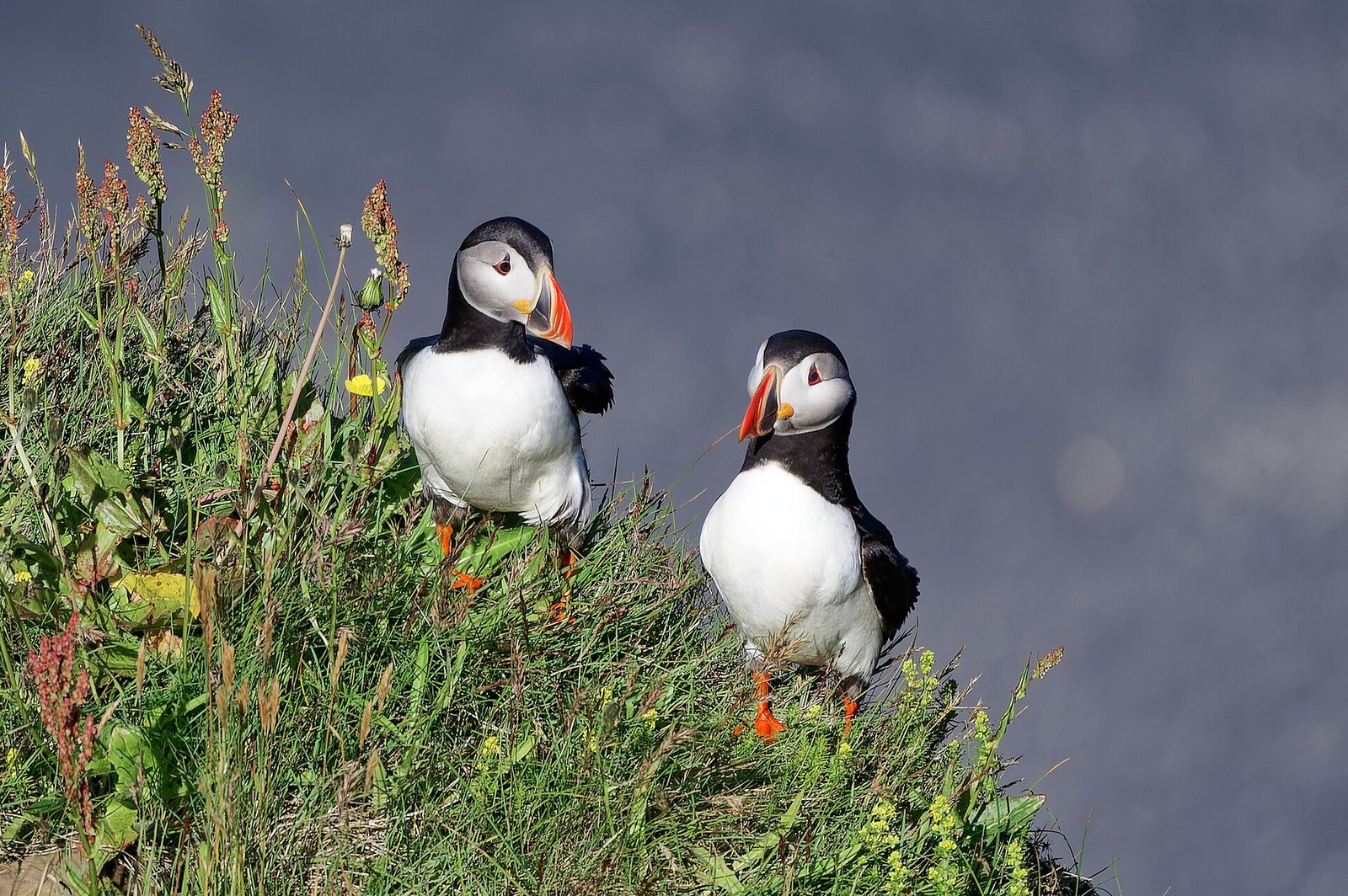
Hafnarhólmi, Borgarfjörður eystri (East)
This is one of the easiest places in the country to watch puffins. Hafnarhólmi is a small islet at the harbour, joined to land, with wooden stairs, platforms and a shelter built right among the burrows. About 10,000 pairs nest there.
Viewing is free. The car park is paid, about 1,000 ISK a day for a normal car, collected by camera (Check-it, October 2026). Puffins are there from mid-April to early or mid-August.
It’s about 1 hour 15 minutes (76 km) from Egilsstaðir. If you’re camping in the east, it pairs well with Atlavík from my list of the best campsites in Iceland.

What I’d book
Only in Reykjavík for a day or two? Take the boat. Driving the South Coast? Skip it.
Dyrhólaey is free and right on the route. A small car does the job, and I compare local companies on Localrent.
Paid extras further out
- Ingólfshöfði, between Skaftafell and Jökulsárlón: a tractor-pulled hay cart takes you 7 km across the sands, then you do a guided 2–3 km walk on the cape. It costs 12,500 ISK per adult, takes 2.5 hours and doesn’t run on Sundays (Öræfaferðir, October 2026). It’s great fun, but it’s about 5 hours from Reykjavík.
- Vestmannaeyjar (Westman Islands): the biggest puffin colony in Iceland. The Herjólfur ferry from Landeyjahöfn takes 35 minutes.
- Látrabjarg in the Westfjords: famous cliffs where puffins sit a few metres from you. But it’s 420 km and a 6-hour-plus drive each way from Reykjavík. Only go if you’re touring the Westfjords anyway.
Be Kind to Them: Puffins Are in Trouble
The puffin is Iceland’s most common bird. The population was estimated at around 2 million pairs, but it has dropped by more than half since 1998. On the latest Icelandic red list, the puffin is classed as critically endangered (Náttúrufræðistofnun).
So, on land:
- Stay on the paths. Burrows collapse under your feet.
- Don’t chase them for a selfie.
- Never fly a drone near a colony.
And honestly, I’d skip puffin on restaurant menus.
One more tip: Elding and Special Tours also run whale watching from the same harbour, and Elding sells a whale-and-puffin combo. If you’re only in Reykjavík for a short stop, that’s an efficient morning. Just don’t try to squeeze it in on the day you’re driving out. That’s one of the classic Iceland road trip mistakes.
Planning South Iceland yourself? Don’t overpay on the way.
My free guide: 10 things tourists waste money on in Iceland, and what locals do instead. Prices checked October 2026.
Reykjavik Puffin Tour FAQ
How much is a puffin tour in Reykjavík?
From 7,800 ISK per adult (Special Tours) or 8,300 ISK (Elding Classic) for one hour. Elding’s small-group Premium tour is 12,450 ISK (October 2026).
Can you visit Lundey island?
No. Lundey and Akurey are protected, and the tours don’t land. You see the puffins from the boat, which slows right down near the shore.
What months can you see puffins in Iceland?
From about late April to mid-August. June and July are best. From September to mid-April they’re out at sea.
Where can I see puffins in Iceland for free?
Dyrhólaey on the South Coast (free viewing, paid parking) and Hafnarhólmi in Borgarfjörður eystri (free viewing, paid parking). Both are from land, and you need a car.
Is the Reykjavík puffin tour worth it?
If you don’t have a car or you’re only in Reykjavík, yes. It’s one hour, cheap by Iceland standards, and sightings are near-certain in June and July. If you’re driving the South Coast, Dyrhólaey gives you puffins for free.