
Just so you know: some links in this post are affiliate links. If you book through them, I may earn a small commission at no extra cost to you. I only link to things I’d tell a friend to use.
Almost everyone who drives the South Coast stops at Skógafoss. Far fewer people know that a second waterfall is tucked into a gorge just east of the same little village, about a 20-minute walk from the Skógar Museum. That’s Kvernufoss, and it’s one of the best short walks on the whole coast.
So here’s how to get to Kvernufoss without guessing: where to park, what the walk is actually like, when you can get behind the falls, and how to fit it into a South Coast day without wrecking your schedule. Prices checked October 2026.
The quick version
Park at the Skógar Museum car park (paid, in the Parka app), not at Skógafoss. Walk about 1 km up the Kverná stream, roughly 20 minutes each way. Close the sheep gate behind you. Allow about an hour in total. The waterfall itself is free, and when the path is dry you can walk behind it.
Why Kvernufoss is worth the detour
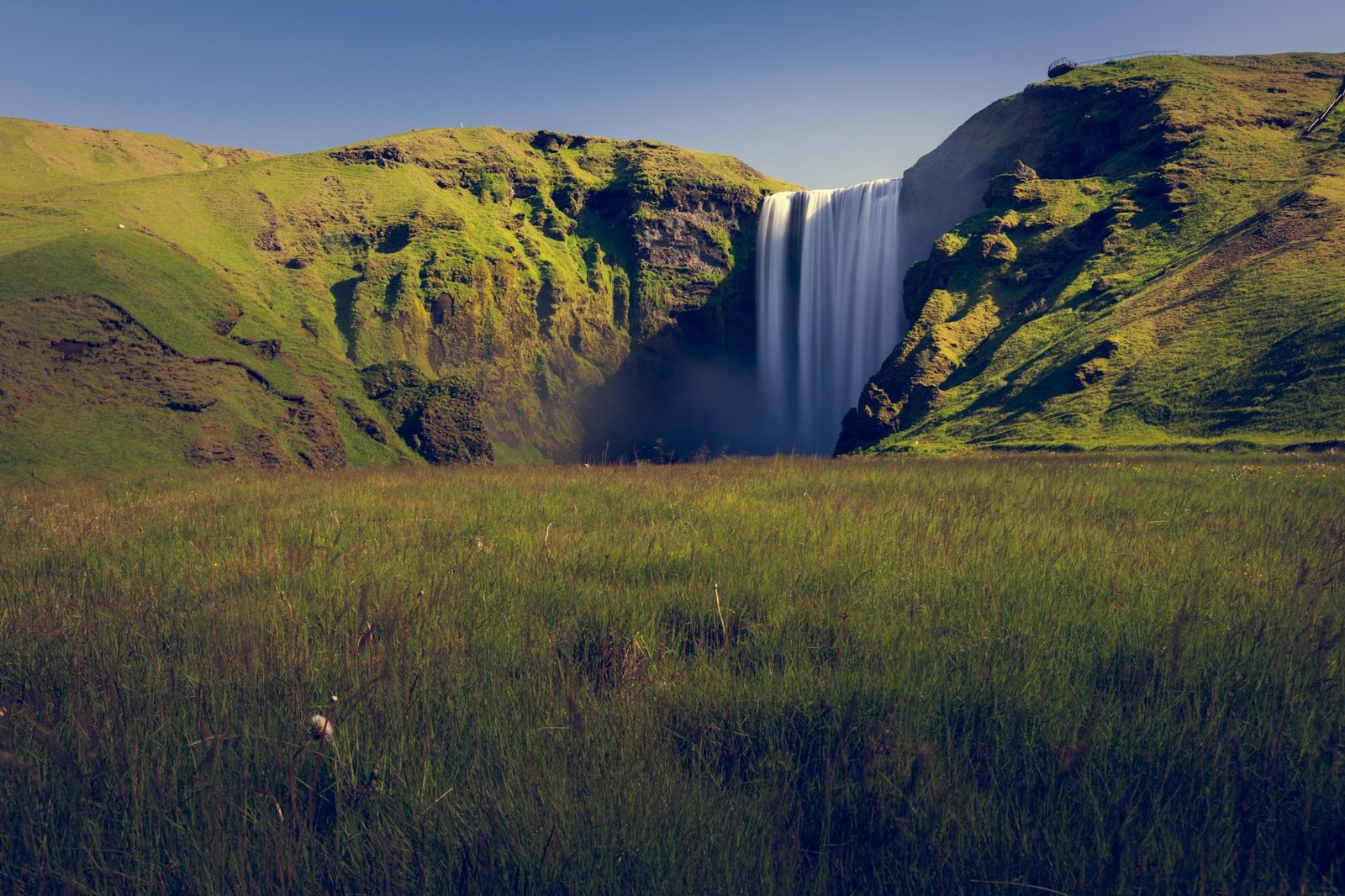
Skógafoss is 60 metres high and 25 metres wide, you can see it from the Ring Road, and on a summer afternoon the area in front of it is packed. Every tour bus on the South Coast stops there. It’s still worth seeing. It’s just not peaceful.
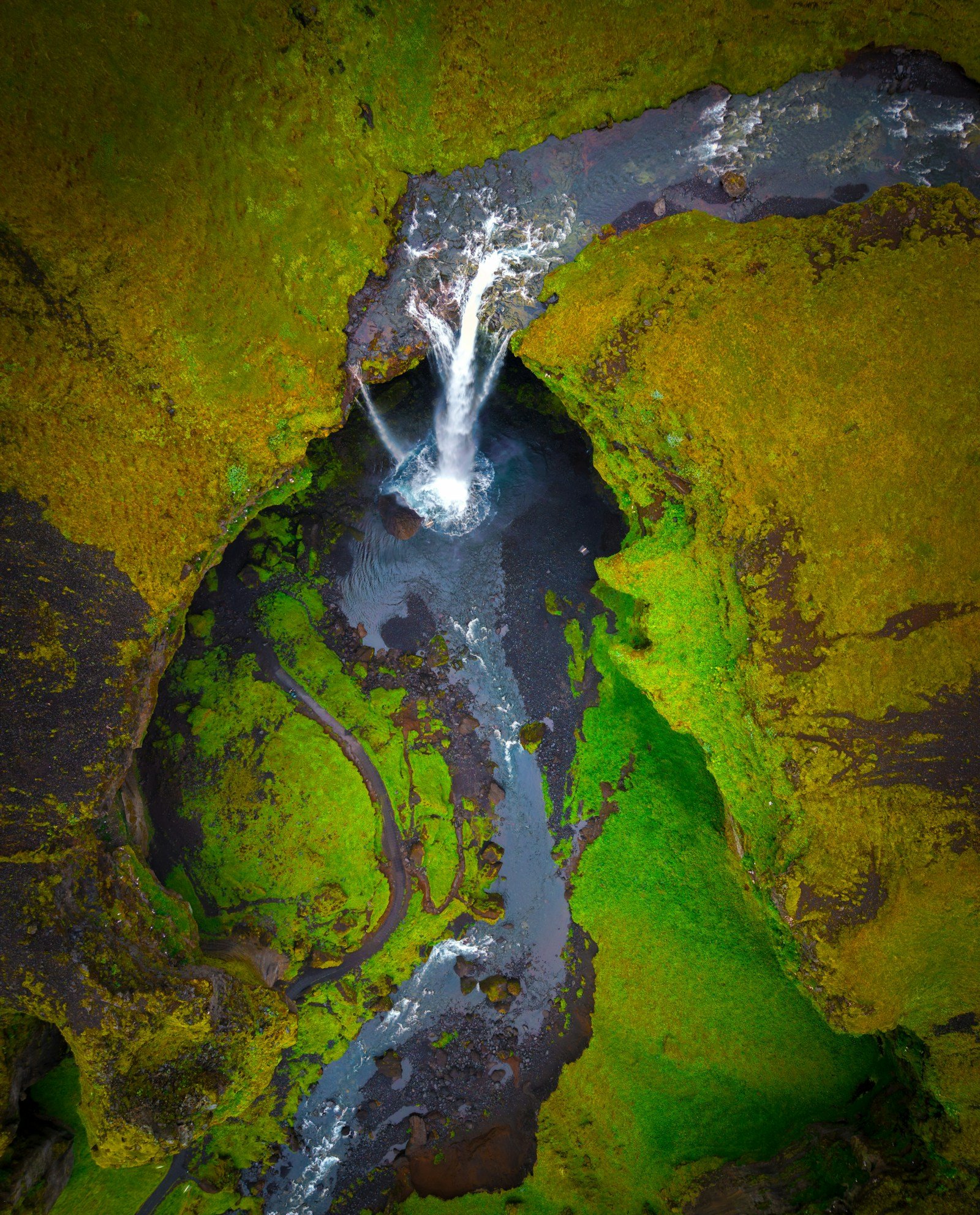
Kvernufoss is roughly half the height, around 30 metres, and drops off an overhang into a narrow canyon lined with moss. You can’t see it from the road, which is exactly why most people never find out it’s there. What you get for a short walk:
- A waterfall you can walk behind, without the queue you get at Seljalandsfoss
- A proper little canyon walk, with the stream next to you the whole way
- A lot fewer people. Not none, but a lot fewer
Let me be honest, though: Kvernufoss isn’t a secret anymore. Instagram found it a few years ago, and at midday in July you’ll share it with a few dozen other people. Compared to the crowd at Skógafoss, that still feels quiet.

How to get to Kvernufoss, step by step
Here’s how to get to Kvernufoss from the Ring Road in five steps. None of them is hard, but the first two are where most people go wrong.
1. Drive to Skógar and follow the museum signs
From Reykjavík it’s about 155 km east on Route 1, roughly two hours without stops: over Hellisheiði, through Selfoss and Hvolsvöllur, past Seljalandsfoss. When you turn off Route 1 for Skógar, follow the signs for Skógasafn, the Skógar Museum, instead of the ones for the waterfall. The museum is at the east end of the village, a couple of minutes’ drive from the Skógafoss car park.
2. Park at the museum car park
The car park belongs to the museum. It’s paid in the Parka app, so pay the same day, or the bill lands on your rental car with a fee on top, one of the classic Iceland road trip mistakes.
3. Find the gate and follow the stream
From the car park, walk round the right-hand (east) side of the museum buildings. There’s a small sign for Kvernufoss and a gate in the fence. Sheep graze here, so please close the gate behind you. Then just follow the Kverná stream upstream into the gorge. You can’t really get lost: the canyon walls do the navigating for you.
4. Walk about 20 minutes
It’s about 1 km each way, so roughly 2 km there and back. At a normal pace that’s 15–20 minutes each way, longer if you stop for photos, which you will. Long stretches of the path have anti-slip pavers and it’s close to flat, so most people manage it fine, kids included. The last part near the falls is wet gravel and rocks, so it’s not great for pushchairs.
5. Walk behind the falls, if it’s safe
The path climbs up the left side of the pool and curves round into a hollow behind the water. Standing there, looking out through the curtain of water at the canyon, is the reason to come. You will get wet. Spray drifts everywhere, so a waterproof jacket isn’t optional here.
Skip the back of the falls in winter, when the path ices over and icicles can break off the overhang, and after heavy rain, when the stream is high. The view from the front is lovely on its own, and it isn’t worth a twisted ankle.
What I’d book
A rental car, because no bus stops here
Tour buses stop at Skógafoss and leave. To get the extra hour for Kvernufoss you need your own wheels. Localrent shows the Icelandic companies side by side, with what’s included.
How long to spend at Kvernufoss
A lot of websites say 30 minutes. Fine if you jog. Realistically:
- Park, pay in the app, find the gate: 5 minutes
- Walk in: 15–20 minutes
- At the waterfall, including going behind it: 15–20 minutes
- Walk back: 15–20 minutes
Budget about an hour. Add 30–45 minutes for the museum if it’s raining and you want somewhere dry.
Kvernufoss vs Skógafoss: do you need both?
Yes. They’re a few minutes apart and they’re completely different experiences.
Skógafoss:
- 60 m high, 25 m wide, a huge wall of water
- Right next to the car park
- Rainbows in the spray on sunny days
- 500+ steps up the side to a viewing platform, where the Fimmvörðuháls trail starts
- Busy from mid-morning to late afternoon, most of the year
Kvernufoss:
- About 30 m, a single ribbon of water in a narrow canyon
- A 20-minute walk each way
- You can walk behind it when conditions allow
- Quieter, especially early and late in the day
My order: Skógafoss first, as early as you can get there, before the buses. Then Kvernufoss, while the buses are pulling into Skógafoss.
Fitting Kvernufoss into a South Coast day
Kvernufoss adds about an hour, so here’s how I’d fit it in on a day trip to Vík:
- Seljalandsfoss and Gljúfrabúi: 45–60 minutes
- Skógafoss: 45 minutes, about 25–30 minutes’ drive further east
- Kvernufoss: about 1 hour
- Sólheimajökull glacier: about 15 minutes east
- Dyrhólaey and Reynisfjara: 1.5 hours between them
- Vík: food and fuel, then about 2.5 hours back to Reykjavík
That makes for a long day of around 12 hours. I break the whole route down stop by stop, with parking prices, in how long the South Coast drive really takes. If the day looks too tight, sleep near Vík rather than cutting stops.
Don’t forget the kilometre tax. Reykjavík to Skógar and back is about 310 km, which at 6.95 ISK per km comes to roughly 2,150 ISK (October 2026). The full day out to Vík is about 370 km, so around 2,600 ISK. Ask at pickup whether your rental company charges it per km or as a flat daily fee.
What I’d book
A guided Sólheimajökull glacier walk
It’s 15 minutes from Kvernufoss and it’s the one stop on this stretch where I’d pay for a guide. Small groups, crampons included, and you drive yourself there.
Best time to visit Kvernufoss
Summer (June–August): the path is at its easiest and the moss is bright green. It’s also the busiest time of year. With daylight until close to midnight, go before 10 in the morning or after 6 in the evening and you’ll get it much quieter.
Shoulder season (April–May, September–October): the sweet spot. Fewer people, still decent daylight, and often the best water levels for getting behind the falls. Expect mud after rain.
Winter (November–March): beautiful, with ice along the canyon walls, but the path can be pure ice. Bring microspikes and don’t go behind the falls. In December you only have about four to five hours of usable daylight, so plan the whole day around it.
Whatever the season, check umferdin.is for road conditions and vedur.is for wind before you set off, and leave your plans on safetravel.is if you’re heading further into the mountains.
What to bring
- A properly waterproof jacket: the spray behind the falls soaks you
- Shoes with real grip: waterproof walking boots ideally, because the last stretch is wet rock
- Microspikes from November to March: they cost about the same as a lunch in Reykjavík and save a lot of falls
- A lens cloth: otherwise every photo from behind the falls is a blur of droplets
Don’t buy expensive hiking gear just for this. It’s a short, easy walk, and whatever you’d wear around Skógafoss is fine.
While you’re in Skógar
The Skógar Museum (Skógasafn) is better than it sounds: a big folk and transport collection, plus old turf houses and a little church you can walk through. Entry is 3,000 ISK for adults, 2,000 ISK for students and seniors, 1,600 ISK for ages 12–17, and free for under-12s with an adult, or 6,750 ISK for a family ticket (2026 prices on skogasafn.is).
It’s open 09:00–18:00 from June to August and 10:00–17:00 the rest of the year. If it’s pouring with rain, it’s a good place to wait out the worst of it.
Food in Skógar is limited and pricey. I’d grab snacks at Krónan or Bónus in Hvolsvöllur on the way out, or wait for Vík, which has much more choice.
Driving the South Coast yourself? Don’t overpay on the way.
My free guide: 10 things tourists waste money on in Iceland, and what locals do instead. Prices checked October 2026.
Kvernufoss FAQ
Is Kvernufoss worth visiting?
If you’re already stopping at Skógafoss, yes. For about an hour you get a walk-behind waterfall in a canyon, with far fewer people than the big stops on Route 1.
How much does it cost to visit Kvernufoss?
The waterfall is free. Parking at the Skógar Museum car park is paid, in the Parka app.
How long is the walk to Kvernufoss?
About 1 km each way on an almost flat path, so 15–20 minutes in and the same back.
Can you walk behind Kvernufoss?
Yes, from about late spring to autumn, when the path is clear of ice and the stream isn’t in flood. Expect to get wet.
Can you visit Kvernufoss in winter?
Yes, but bring microspikes, stay in front of the falls, and keep an eye on the short daylight.
Is Kvernufoss worth the hour?
Kvernufoss won’t be the biggest waterfall you see in Iceland. It might be the one you remember best, though, because you got to stand behind it in the quiet. That’s what knowing how to get to Kvernufoss buys you: one extra hour and a much better memory of Skógar than a crowded photo at the bottom of the stairs.