
Just so you know: some links in this post are affiliate links. If you book through them, I may earn a small commission at no extra cost to you. I only link to things I’d tell a friend to use.
Most people think the hard part of winter driving in Iceland is the snow. Snow is part of it, but the bigger limit is the clock. On the shortest day, 21 December, the sun rises in Reykjavík at about 11:20 and sets at about 15:30. That’s around four hours of daylight, in a country where the drive from Reykjavík to Vík alone is 2.5 hours each way.
I’m Icelandic, I’ve lived here my whole life and I’ve spent almost 20 years in tourism. Winter is when the gap between a good trip and a stressful one is widest. Below are the rules that matter, the three websites to check every morning, and what to do when the weather turns. Information checked November 2026.
The quick version
Drive in daylight, which in December is roughly 10:45 to 15:45 in Reykjavík and less after mid-month. Check umferdin.is, vedur.is and safetravel.is every morning before you set off. Studded tyres are allowed from 1 November to 14 April. Keep each day’s driving short, stay off the highland roads (they’re closed all winter), and if there’s an orange weather warning on your route, don’t go.
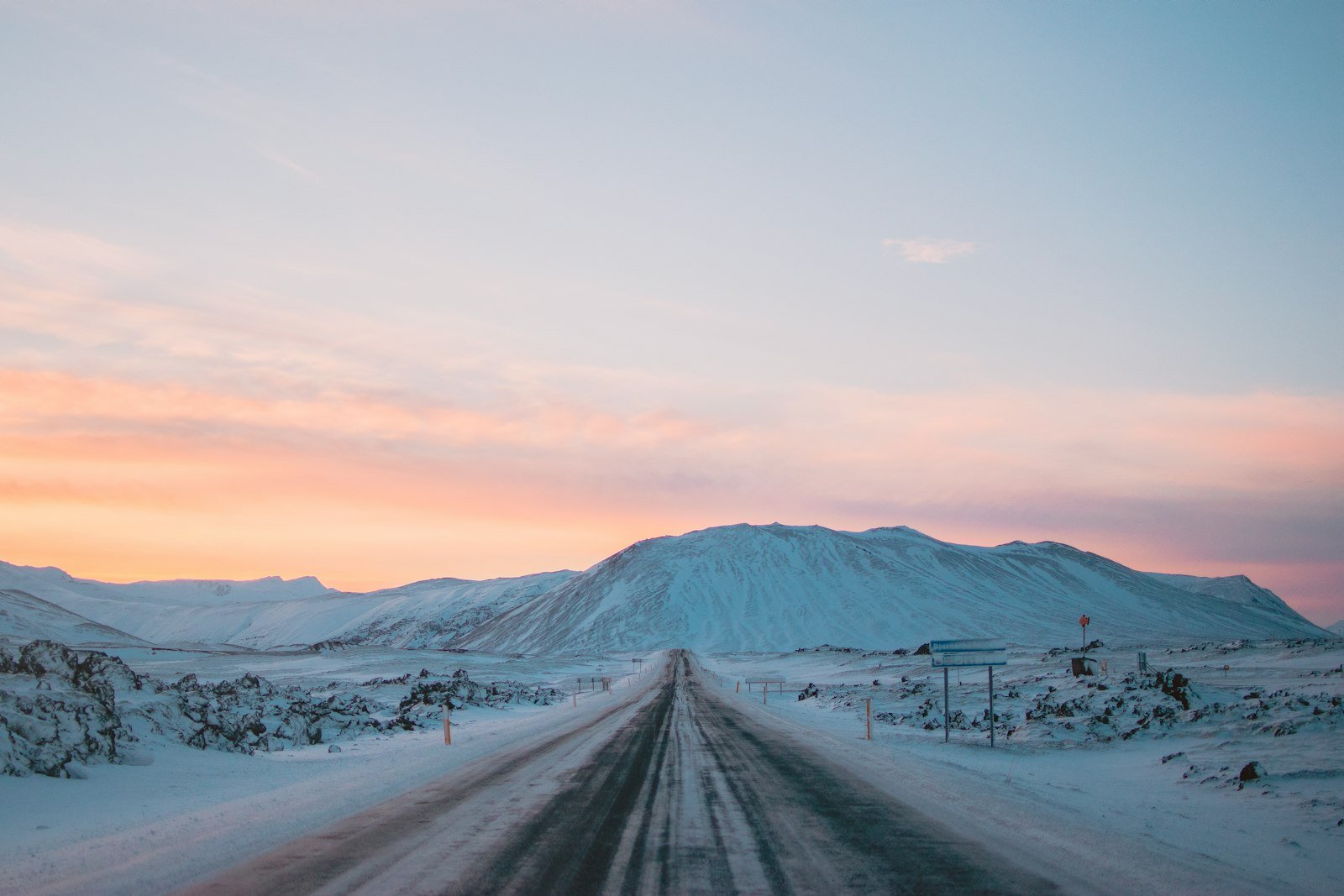
Winter Driving in Iceland: What Actually Changes
In summer, the main question is how long a drive takes. In winter there are three more: is the road open, how strong is the wind, and will you get there before dark. All three can change within hours, which is why we check in the morning, not the night before.
Vegagerðin, the Icelandic Road and Coastal Administration, services about 5,000 km of the country’s roughly 12,000 km of roads in winter. The rest get no regular snow clearing. And on the roads that are cleared, Vegagerðin says plainly that keeping them free of ice isn’t realistic in Iceland’s weather. So plan on meeting ice, not on avoiding it.
1. Plan Every Day Around the Light
Daylight in Reykjavík drops from about five hours at the start of December (roughly 10:45 to 15:45) to just over four hours around the solstice. In the north it’s shorter still. Outside towns there are no street lights, so after dark you’re driving on your headlights alone, on a road that may be icy, sometimes with snow blowing across it.
Local rule: do the driving in the light and the sightseeing close to where you sleep. Leaving in the dark on a cleared main road is fine. Arriving in the dark on a road you don’t know is what to avoid.
That changes what one day can hold. The South Coast drive to Vík is already about an 11-hour day done properly in summer. In December, sleep in or near Vík instead of driving back the same day. The Golden Circle fits a winter day far better.
2. Check Three Sites Every Morning
- umferdin.is, run by Vegagerðin: conditions on every stretch of road, closures, wind at the weather stations and the road cameras. Read the legend on the map rather than guessing what a colour means.
- vedur.is, the Icelandic Met Office: weather warnings, and a wind map where you can pick the time you’ll be driving and see the colour for your route.
- safetravel.is: alerts that don’t appear on the road map, and the place to leave a travel plan.
Rather talk to a person? Vegagerðin’s 1777 line answers questions about roads and weather from morning to night, all year.
Local tip: If you’re crossing a mountain pass in the afternoon, check again at lunch. The morning’s conditions tell you very little about 15:00.
What I’d sort out before flying
Mobile data from the moment you land
The road map and the warnings are no use without signal. An eSIM set up at home means you can check umferdin.is from the airport car park.
3. Tyres: What Your Rental Should Have
Studded tyres are allowed on Iceland’s roads from 1 November to 14 April, and over the same winter period tyres need at least 3 mm of tread. Icelandic rental companies fit winter tyres for the season, but don’t assume. Look at the tyres when you pick up the car, and ask whether yours are studded.
Do you need a 4×4 in winter?
On the main roads in the south and west, not always, but it helps. A 4×4 gets you moving on snow and up slippery hills more easily. It doesn’t stop any faster on ice, and that’s where people get caught out. Good tyres and a lower speed matter more than four-wheel drive. If you’re heading north or east, or your accommodation is at the end of an unpaved road, take the 4×4.
What I’d compare
A 4×4 on winter tyres if you’re leaving the south coast
Compare the Icelandic companies side by side, and check what each price includes before you choose.
4. Ice Is Worst Where You Don’t Expect It
Vegagerðin names the usual places: bridges, low-lying stretches, and parts of the road in shadow, which stay colder than the road around them. A road can be dry for twenty minutes and then glazed on a single bridge. You should slow down for one-lane bridges anyway. In winter, slow down more.
Black ice looks like a wet road. If the temperature on the dashboard is around zero and the road looks shiny, treat it as ice.

5. Respect the Wind
Wind is the part visitors underestimate. Strong side gusts push a small car across the lane, and around Vík they can slow you to 60 km/h. A gust can also tear a car door out of your hand. Park facing into the wind where you can, and hold the door with both hands when you open it.
Check the wind before you go: the wind map on vedur.is for the time you’ll be driving, and the weather stations along your route on umferdin.is.
6. Closed Means Closed
The highland roads, F-roads included, are closed all winter. Your phone’s map may still suggest one as a shortcut. Don’t take it.
Lower roads close too, during storms. A closed road is signed Lokað. Driving past a closure isn’t only dangerous for you. If you get stuck, it’s the volunteers of the rescue teams who come out to get you.
7. If the Weather Turns
The Met Office issues yellow, orange and red warnings for each region. As a driver, read them like this:
- Yellow: drive with care, check the road map more often and be ready to change plans.
- Orange: postpone the drive and stay where you are until it passes.
- Red: don’t travel.
Storms here often blow through within a day. Waiting costs you a night’s accommodation. Pushing on can cost a lot more. If you do get caught out, stay in the car, keep warm and call 112. The 112 Iceland app from SafeTravel can send your location to the emergency services.

8. Fuel, Phone and What to Keep in the Car
Fill up whenever you pass a station outside town, not when the warning light comes on. Many countryside pumps are unstaffed and want a card with a PIN, which is covered in how to pay for gas in Iceland.
Keep in the car: warm layers and a hat, even for a short drive; water and something to eat; a phone charger; and an ice scraper. Check there’s a scraper in the car before you leave the rental office.
A Winter Plan That Works
Keep each day to a few hours of driving with room to spare. A first winter trip that fits the light: the Golden Circle on day one, the South Coast to Vík on day two with the night there, and back towards Reykjavík on day three, with an evening at a town pool to warm up. If conditions are good on the South Coast day, Kvernufoss is a 20-minute walk from Skógar.
Save the full Ring Road for May to September. The 7-day Ring Road itinerary explains why seven days is already the minimum in summer.
Winter is a good time to drive here, on the right days. Check the roads every morning, drive in the light, keep the days short, and when the warning is orange, stay where you are.
Driving Iceland in winter? Don’t overpay on the way.
My free guide: 10 things tourists waste money on in Iceland, and what locals do instead. Prices checked October 2026.
Winter Driving in Iceland: Quick Questions
Is it safe to drive in Iceland in winter?
Yes, if you plan around daylight, check the roads and weather every morning, and stay put when there’s an orange or red warning. Most problems come from pushing on to keep to a schedule.
When can you use studded tyres in Iceland?
From 1 November to 14 April. Over the same period, tyres need at least 3 mm of tread.
Can I drive the Ring Road in December?
You can, but with four to five hours of daylight and storms that can close stretches of road, a full loop in a week leaves no room for a bad day. In winter, stick to the south and west.
What’s the best website for road conditions in Iceland?
umferdin.is, run by Vegagerðin. Use it with vedur.is for the warnings and the wind.